[vc_row][vc_column][vc_column_text]
Have you ever felt like a fraudster when you achieved something that you felt that it was out of sheer luck, rather than through your hard work?
Have you encountered situations when you felt like an imposter when your internal system told you that you are not adequately equipped to perform a role?
When I first came to know the term Imposter Syndrome, I was shocked by the definition. That initially brought me to the state of self-denial.
I was thinking “Oh dear, I did not realise I went into the Imposter Syndrome many times in my work life!”
But the truth is, I got over it sub-consciously by through ways of overcoming that feeling of an Imposter.
To overcome Imposter Syndrome, let’s look at Imposter Syndrome in perspective.
How does one get into the Imposter Syndrome state of mind?
Firstly, let’s define Imposter Syndrome:
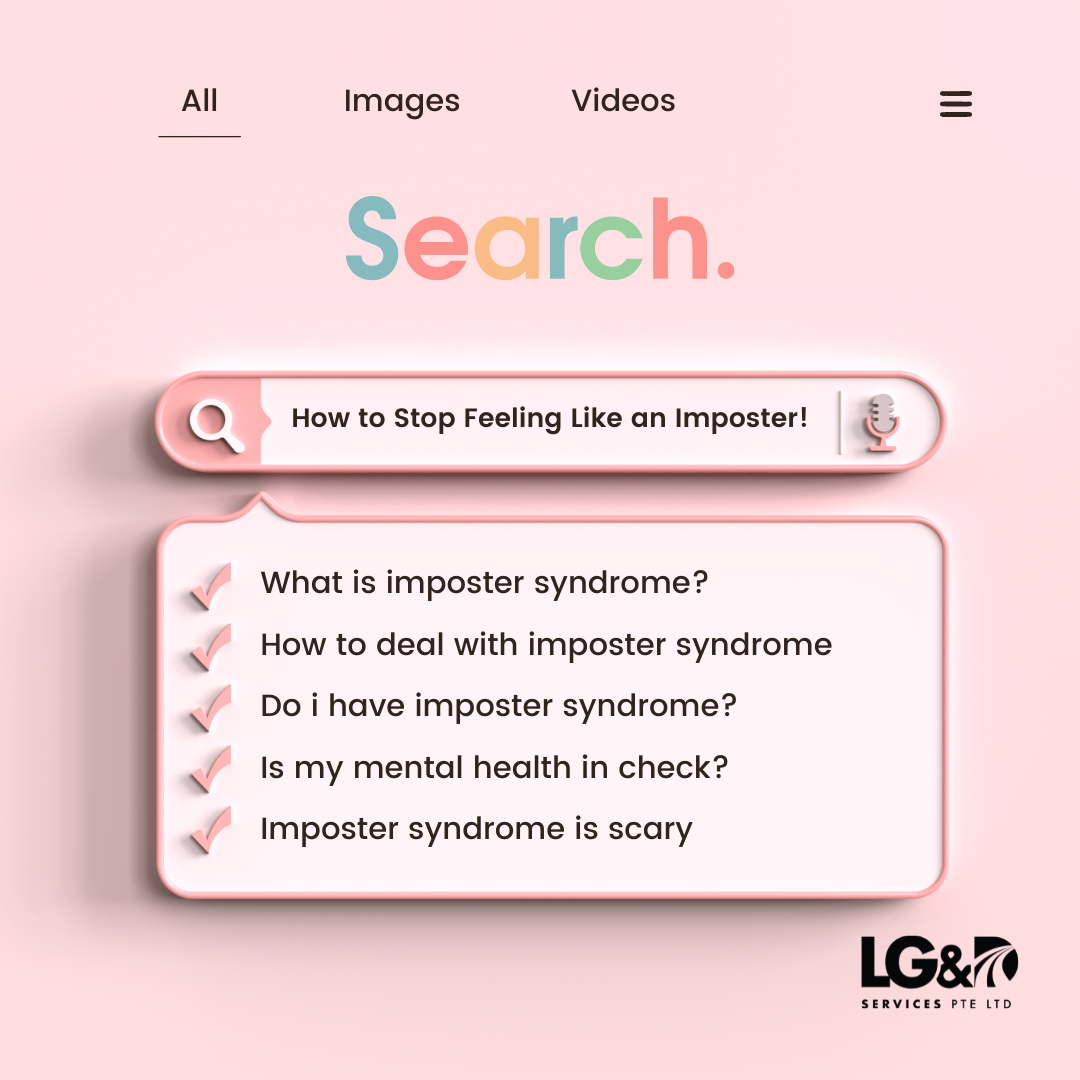
Imposter Syndrome is a state of mind where you doubt your capabilities and experiences, and when you are involved in a challenge, project or task. You end up feeling like an imposter.
It is possible for you to feel like an imposter when you are tasked to do something that is beyond your comfort zone, experience or background. You are uncertain of how you are going to meet the other party’s expectations. You are not confident of doing it.
In the worst scenario, you feel like a fraud. You feel that you are going to mess it all up because you are not competent. You keep doubting yourself.
Give Yourself the Chance to Stretch beyond Your Imagination?
You want to perform your role well at work, in a group activity or other settings. But you will face times where you are given challenges to stretch yourself beyond your existing capabilities.
Typically, you would face 3 choices when a challenge is presented to you:
- Take it up without hesitation;
- Take it up because you feel that you can’t reject it; or
- Reject it.
What choice would you make when you are presented with a challenge?
Before you come to your decision, let’s think of the potential outcomes for your choice:
- Take up the challenge without hesitation
Taking up a challenge without hesitation is easier said than done!
Taking up a challenge without a thought process could easily lead you to enter into Imposter Syndrome because you would simply feel like a fraud after some time.
Pause and ask yourself the questions below, and formulate a game plan in your mind before you take up the challenge:
- You are not familiar with most parts. Where can you get resources to help you?
- Is the timeline something you can handle since you have never taken up such task? Is there a close precedent that can be used as an estimation of the timeline? Are you able to ask for an extension?
What are your benefits when you pull it through? A higher profile? A potential career progression strategy? Greater access to network? This thought process will help you see your desired outcomes and visualise your challenge positively.
2. Take up the challenge because you feel that you can’t reject it
This appears to be a ‘no choice’ type of choice. However, sometimes you do not simply have a choice, as there are no other options due to likely bad consequences of rejecting the task.
Rather than to take up the challenge because you are faced with ‘no choice’, do look at the thought process for Choice 1 above. It will help you to be more prepared to take up the task, ease your fear and keep you from getting into Imposter Syndrome.
3. Reject the Challenge
You may reject a challenge for different reasons, which include:
- You are not mentally ready to take it up;
- You are used to your comfort zone;
- You do not have any resources to help you.
Whatever reasons you have, the key thing is for you to be able to think for yourself ahead of the potential consequences of rejecting the challenge. Consequences could be positive or negative, depending on the situation.
I have rejected some challenges as the liability risk was high and I did not have the resources to reduce the risk that I would face.
But I felt that rejecting other challenges served to block opportunities to showcase myself in a different light. I took up one challenge in the technology space focusing on data transformation even though I had no educational background in computer science or technology.
Before I took up the offer, my mind went through quickly to know where I can find or leverage on resources to make it work, before I took up the challenge. Nevertheless after accepting this challenge, I went through a maze and endured some hardships.
At the end of it all, I felt that the desired outcomes far outweighed the risks of rejecting this challenge. It was the gateway to making myself more versatile!
How about you? Have you experienced Imposter Syndrome and want to share how you overcome this? Post your strategy here for our community to learn from your experience!
[/vc_column_text][/vc_column][/vc_row]